
Traditional vs Compounded Attar: What You’re Actually Buying
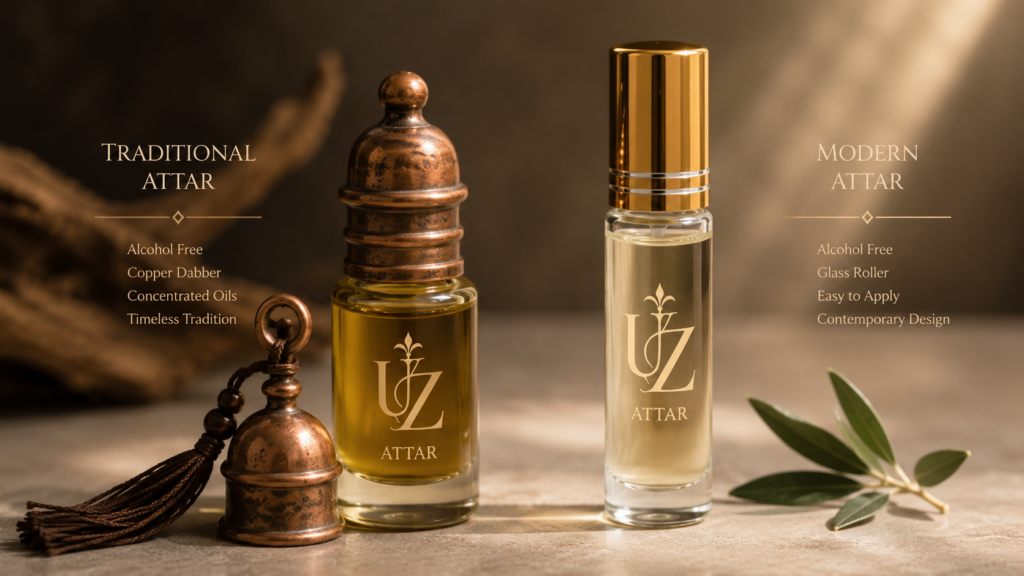
Quick answer: Not all attar sold today is made the traditional way. Genuine hand-distilled attar (the centuries-old deg-bhapka method) exists alongside modern compounded attar, which blends aromatic oils and aroma-chemicals into an oil base. Both are legitimately called “attar” in the market — they’re just different products with different price points, and knowing which is which helps you buy with realistic expectations.
The Traditional Method, Briefly
Historically, attar was produced through hydro-distillation using copper vessels called deg and bhapka — a slow process where steam carries fragrance from flowers, wood, or spices into a sandalwood oil base, sometimes over days or weeks per batch. This method, centered for centuries around Kannauj in India, is genuinely labor-intensive: real sandalwood-based rose or jasmine attar can take many hours of distillation per batch, plus aging afterward.
Why Most Commercial Attar Isn’t Made This Way
Traditional deg-bhapka attar is slow, requires skilled artisans, and depends on raw materials like natural sandalwood oil that have become increasingly scarce and expensive. That combination makes genuine hand-distilled attar naturally limited in supply and higher in price. The attar sold widely in shops and online — including much of what’s available at accessible price points — is typically compounded attar: aromatic oils and synthetic aroma-molecules blended into a neutral or lightly-scented oil base, formulated to smell similar to traditional profiles at a fraction of the cost and production time.
Is Compounded Attar a Lesser Product?
Not necessarily — it’s a different one. Compounded attar can still be alcohol-free, oil-based, and long-wearing, which are the core qualities most buyers actually want from attar day to day. What it won’t offer is the specific depth and natural complexity that comes from genuine hydro-distillation and aging, or the rarity that justifies a premium price. Neither type is “fake” as long as it’s sold honestly — the issue only arises when a compounded blend is marketed as rare traditional distillate to justify a price it doesn’t warrant.
What This Means When You’re Buying
- Very low prices on “rare” notes like natural oud or sandalwood attar are a signal. Genuine hydro-distilled versions of these notes are expensive to produce; a bargain price usually means compounded, not traditional.
- Ask what you’re buying, not just what it’s called. “Attar” alone doesn’t tell you which production method was used — a straightforward seller will be clear about it if you ask.
- Judge it by how it performs on you, not by the label. A well-made compounded attar can genuinely outperform a poorly stored or diluted traditional one in real-world wear.
Frequently Asked Questions
Is compounded attar the same as fake attar?
No. Compounded attar is a legitimate, widely-used production method — blending aromatic oils into a base rather than hand hydro-distilling from raw flowers. It’s different from traditional attar, not fraudulent, as long as it’s represented honestly.
Why is traditional attar so much more expensive?
The distillation process is slow and labor-intensive, raw materials like natural sandalwood are increasingly scarce, and a single batch can take days to weeks to produce — all of which drive up cost compared to a compounded blend.
How can I tell which type I’m buying?
Price is a strong indicator — genuine hydro-distilled attar on rare notes rarely comes cheap. Beyond that, ask the seller directly; a transparent one will tell you.
Final Thought
“Attar” covers a wider range of products than the romanticized deg-bhapka story most articles tell. Both traditional and compounded attar have a place — what matters is buying from a seller who’s honest about which one you’re getting. Browse UZ’s Attar collection, or start with a tester to see how a scent performs on you before committing to a full bottle.