
How to Tell If Your Attar Is Pure: 4 Simple Tests You Can Do at Home
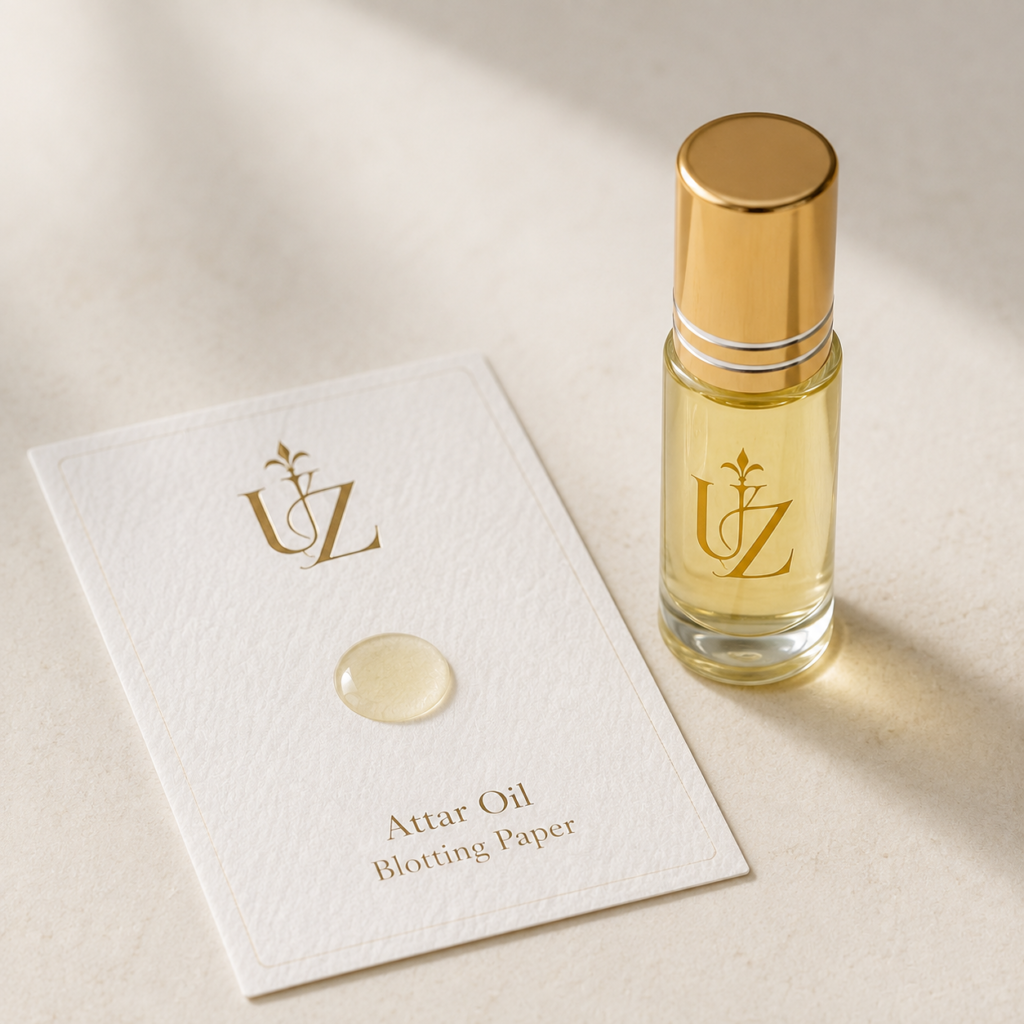
Quick answer: Real attar smells layered and develops over time, absorbs into skin without leaving grease, and leaves no ring on blotting paper. Fake or diluted attar smells flat, feels oily, and fades within minutes. Here’s how to check each of these in under five minutes.
The Blotting Paper Test
Put one drop of attar on a plain piece of paper and let it sit for 30-45 minutes. Pure attar dries down without leaving a greasy ring behind. If a visible oily circle remains after it dries, the attar has likely been cut with a cheap carrier oil. This is the single fastest home test and needs nothing but paper.
The Skin Absorption Test
Rub a small amount into your wrist. Pure attar absorbs into skin within a minute or two, leaving no sticky residue. Synthetic or heavily diluted attar tends to sit on the surface, feeling oily or tacky well after application. If your skin still feels greasy 5-10 minutes later, that’s a warning sign.
The Development Test
Genuine attar changes character over time. Apply it and check back at three intervals: immediately, after 30 minutes, and after 2 hours. A real attar opens with one impression, settles into a different one as it warms on skin, and finishes with a distinct base note hours later. A fake attar usually smells the same the entire time, or disappears completely within an hour.
The Price Sense-Check
Natural attar ingredients — rose, sandalwood, oud, musk — are genuinely expensive to produce. A price dramatically lower than every other seller offering the same note isn’t a bargain; it’s a sign of dilution or synthetic substitution. This doesn’t mean the most expensive bottle is automatically the purest, but a price far below the market average for that specific note is worth questioning.
What to Check Before You Even Open the Bottle
- Labeling: Reputable attar sellers name the actual ingredient (rose, oud, sandalwood) rather than vague terms like “fragrance oil.”
- Batch information: A seller who can tell you which batch or source a fragrance comes from is generally more trustworthy than one who can’t.
- Seller transparency: A seller who’s upfront about whether something is a blend, a single-note attar, or a tester — rather than vague about it — is a good sign in itself.
Why This Matters More With Attar Than Perfume
Alcohol-based perfume has a batch code and, usually, an outer box you can cross-check. Attar, especially sold loose in small bottles, often doesn’t — which is exactly why these home tests matter more here. Buying from a seller who’s transparent about sourcing removes most of the guesswork before you ever need to run a test at all.
Frequently Asked Questions
Can I test attar purity without any tools?
Yes. The skin absorption test and the development test need nothing but the attar itself and a bit of patience.
Does a strong scent mean an attar is pure?
Not necessarily. Synthetic blends can be made intensely strong. Strength alone isn’t a reliable purity signal — how the scent develops and absorbs matters more.
Is cheap attar always fake?
Not always, but a price far below the typical range for that specific note (rose, oud, sandalwood) is a reasonable red flag worth double-checking with the tests above.
Final Thought
None of these tests require lab equipment — just a few minutes and attention to how the scent actually behaves. Buying from a seller who’s transparent about sourcing removes most of the guesswork before you ever need to test anything. Browse UZ’s Attar collection, or start with a tester to try a note before committing to a full bottle.