
Middle Eastern vs South Asian Attar: Two Different Traditions
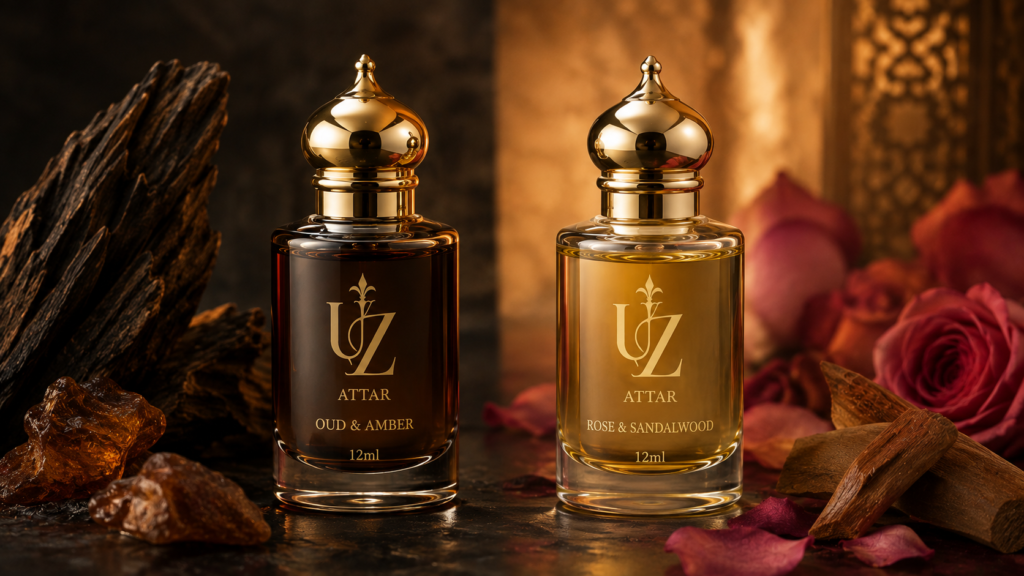
Quick answer: Middle Eastern-style attar leans bold and resinous, oud, amber, heavy musk, built for strong projection. South Asian-style attar, the Kannauj tradition, leans softer and more floral, rose, jasmine, sandalwood-based, built to sit close to skin. Neither is more “authentic” attar than the other, they’re two distinct regional traditions that developed differently.
Two Different Traditions, One Word
“Attar” gets used as a single catch-all term, but it actually covers two fragrance cultures with genuinely different philosophies. The South Asian tradition, centered historically around Kannauj, built its reputation on hydro-distilling flowers and herbs into a sandalwood oil base, prioritizing subtlety and skin-closeness. The Middle Eastern tradition took a different path, leaning into concentrated, high-impact ingredients like oud and amber, designed to project further and last through long social gatherings.
What Actually Sets Them Apart
Character and strength
South Asian attar tends to be gentler in projection, built for someone else to notice only when they’re close. Middle Eastern-style attar is built the opposite way, meant to be noticed from a few feet away and to hold that presence for hours.
Common ingredients
South Asian attar draws heavily on rose, jasmine, mogra, and sandalwood. Middle Eastern-style leans on oud, amber, saffron, and heavier musks. Both traditions use musk, but where South Asian attar uses it as a soft base note, Middle Eastern blends often push it forward as part of the main character.
How they’re typically worn
South Asian attar suits daily, close-proximity wear, work, home, quieter social settings. Middle Eastern-style attar suits occasions where a stronger presence is the actual goal, evenings, weddings, larger gatherings.
Why This Matters When You’re Buying
If you’ve tried one style and didn’t like it, that doesn’t mean attar as a whole isn’t for you, it might just mean the other tradition suits you better. Someone who found a South Asian rose attar too subtle might genuinely love a bold Middle Eastern oud, and the reverse is just as common. Knowing which tradition a specific attar comes from tells you more about what to expect than the word “attar” alone ever will.
Can You Mix the Two Styles?
Yes, and plenty of modern attar blends already do, a South Asian rose base with a touch of Middle Eastern oud added for depth is a common and well-liked combination. The two traditions aren’t in competition, they’re complementary tools for building a scent that suits the occasion.
Frequently Asked Questions
Which style is more traditional, Middle Eastern or South Asian attar?
Both are genuinely traditional, they simply developed in different regions with different priorities, subtlety in South Asia, projection in the Middle East.
Is Middle Eastern attar always stronger than South Asian attar?
Generally yes in terms of projection, though individual blends within each tradition still vary. A South Asian floral can be more or less concentrated depending on the specific attar.
Which style should a beginner try first?
South Asian attar is usually the gentler entry point since it’s built for close-proximity wear. A tester of each style side by side is the fastest way to learn which suits you.
Final Thought
“Attar” isn’t one style, it’s two distinct traditions with different philosophies about what fragrance should do. Trying both, rather than assuming one represents the whole category, is the fastest way to find what actually suits you. Explore UZ’s Attar collection, or start with testers from both traditions to compare them directly.